🇨🇳 China Cosmetic Regulations – Registering and Selling under CSAR
🇨🇳 “With clarity and strategy, even the most complex regulations become pathways to global growth.”🇨🇳
China Cosmetic Regulations
The Cosmetic Supervision and Administration Regulation (CSAR), which came into effect on January 1, 2021, replacing the outdated 1989 Cosmetic Hygiene Supervision Regulations (CHSR).
This article summarises some key points covered in our recent webinar held on this topic, including product classification, registration pathways, ingredient requirements, and the roles of responsible parties in China.
Understanding the China Cosmetic Regulations is crucial for brands looking to enter this market.
🧴 What Is Considered a Cosmetic in China?
China’s definition of cosmetics is broadly aligned with the EU, but with some distinctions in that the China cosmetic regulations ensure that products meet safety and efficacy standards.
- Cosmetics are chemical products applied to external parts of the human body—skin, hair, nails, lips—via spreading, spraying, or similar methods
- Intended functions include cleansing, beautifying, protecting, and modifying
- Toothpaste is now regulated as a general cosmetic
- Soaps are excluded unless they make cosmetic efficacy claims
A key takeaway: if a product is not applied externally or is intended for therapeutic use such as products for damaged skin, ingestion, or disease treatment, they fall outside the scope of the China cosmetic regulation and may be classified as a drug.
🧾 General vs. Special Cosmetics: Key Differences
Every brand must comply with the China Cosmetic Regulations to avoid penalties.
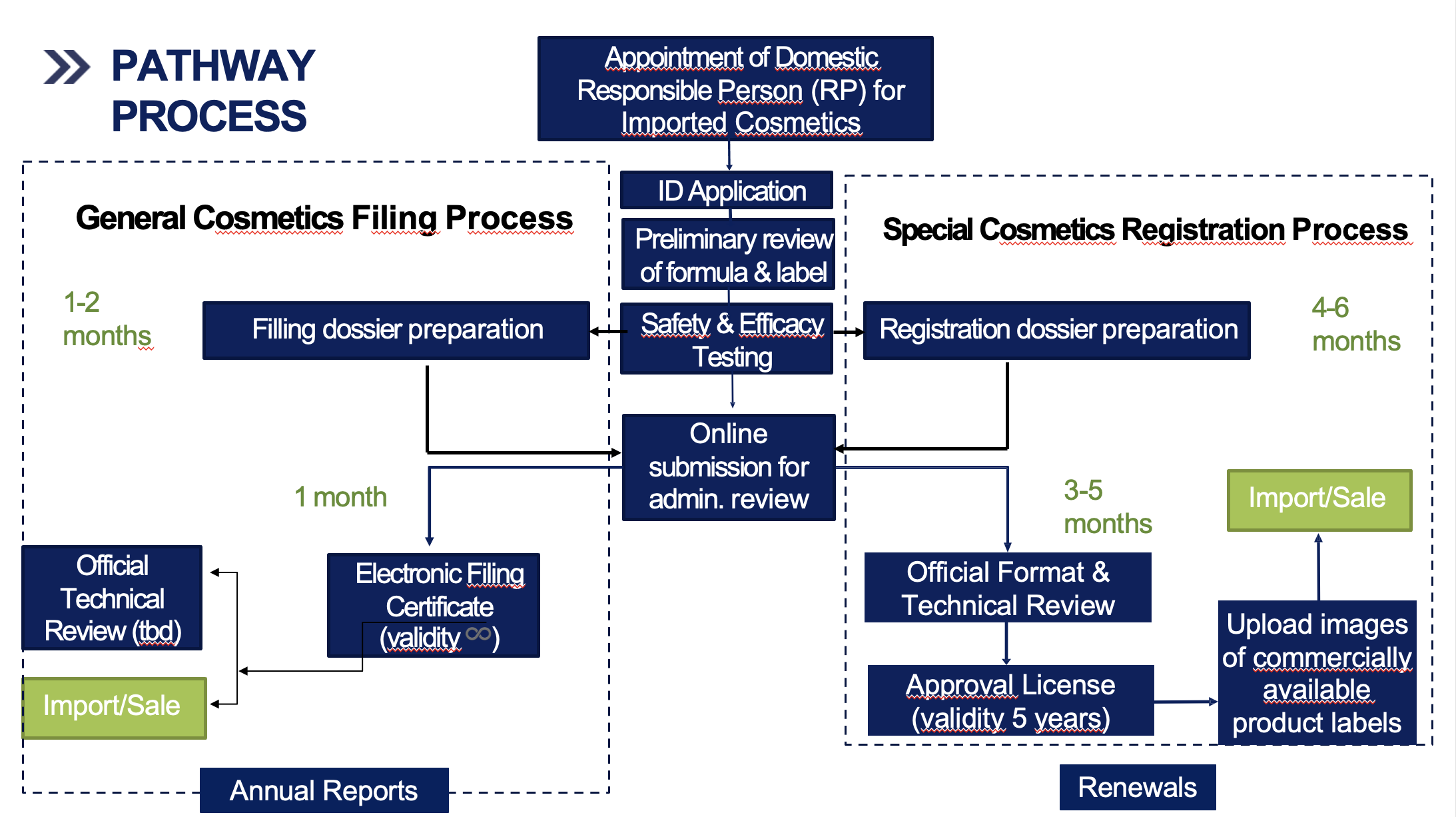
China divides cosmetics into two categories: 1) General and, 2) Special Cosmetics:
- 1) General Cosmetics
- These include products without specific functional claims, such as:
- Skin care
- Hair care
- Nail care
- Makeup
- Perfumes
- These include products without specific functional claims, such as:
Regulatory Pathway: Brands can file with either the National Medical Products Administration (NMPA) or a provincial authority.
Timeline: Filing is relatively quick and once accepted, products can be marketed immediately
Testing: Standard safety and quality tests are required
Post-market: Annual reports must be submitted
- 2) Special Cosmetics
- These are products with specific efficacy claims, such as:
- Hair dyes and perms
- Whitening products
- Sunscreens
- Anti-acne, anti-dandruff, anti-hair loss treatments
- These are products with specific efficacy claims, such as:
Regulatory Pathway: Full registration is required and with the central NMPA ONLY
Timeline: Preparation takes approximately 4–6 months; review takes 3–5 months
Testing: Mandatory efficacy testing in China-accredited laboratories, even if testing has already been done in the EU or US including compliance to ISO guidelines
Post-market: Licenses must be renewed every five years, and surveillance is stricter
🧪 Ingredient Requirements and Safety Assessments
Ingredient Requirements
China maintains a comprehensive Inventory of Existing Cosmetic Ingredients (IECIC). As of 2021, it included over 8,900 ingredients, and the list continues to grow.
- All ingredients in a product must be listed in the IECIC
- If an ingredient is not listed, it must be registered as a new cosmetic ingredient, a costly and time-consuming process
- Products with high-risk ingredients (e.g., active pharmaceutical ingredients) are automatically classified as special cosmetics
The implementation of China cosmetic regulations has changed the way brands approach product development.
Safety Assessments
Safety assessments are dynamic and must be updated whenever:
- The formula changes
- New toxicological data becomes available
- Regulatory standards are updated
- Adverse events are reported
🐇 Animal Testing: Can It Be Avoided?
Animal testing has long been a barrier for cruelty-free brands entering China and many brands have been exploring ways to navigate the China cosmetic regulations without compromising ethics.
However, under the new regulations, general cosmetics may be exempt from mandatory animal testing if certain conditions are met:
- The product must be classified as a general cosmetic
- A GMP certificate issued by a government authority is required from the country of manufacture
- A Cosmetic Product Safety Assessment Report (CPSAR) must be submitted.
⚠️Special cosmetics, however, are not eligible for exemption and must undergo animal testing in accredited Chinese labs before registration.
🇨🇳 The Role of the China Responsible Person
Foreign brands must appoint a domestic responsible person in China as it is now is essential for compliance with China cosmetic regulations. This individual or entity plays a crucial role in regulatory compliance:
- Submits filings and registrations in Chinese
- Reviews formulas and labels
- Maintains safety and technical documentation
- Monitors adverse reactions and reports them to the NMPA
- Manages ingredient codes and updates filings
- Acts as the main contact for inspections and audits
🧼 Quality and Safety Oversight
A Quality and Safety Manager is essential for ensuring compliance with Chinese regulations. Their responsibilities include:
- Overseeing product safety and GMP adherence
- Supervising manufacturing and testing
- Ensuring all testing is conducted in China-accredited labs
- Managing adverse event reporting
- Keeping regulatory documentation accurate and up to date
📅 Planning for Market Entry: Timelines Matter
Market entry timelines must align with the requirements set by China cosmetic regulations.
Timelines for entering the Chinese market vary significantly depending on product classification:
- General cosmetics: 1–2 months for testing and filing
- Special cosmetics: Up to 12 months for full registration and approval
These timelines must be factored into product development plans, especially for brands launching in multiple regions. Delays in China can impact global rollout strategies.
📋 Documentation Checklist
Whether filing for general or special cosmetics, brands must prepare a comprehensive dossier, including:
- Application form and product classification
- Formula details with INCI names and percentages
- Ingredient submission codes
- Safety assessment report with toxicological data
- Microbiological and physical-chemical test results
- Packaging material information
- Free Sales Certificate from the country of origin
- Authorization letter (Power of Attorney)
- GMP certificate (government-issued)
- Notarised Chinese translations of key documents
💡 Final Thoughts
Keeping up with changes in China cosmetic regulations is necessary for ongoing compliance.
China’s cosmetic regulations are evolving toward a more structured and transparent system, inspired in part by European standards. However, the regulatory landscape remains complex, with strict requirements for documentation, testing, and compliance.
The evolving nature of China cosmetic regulations poses both challenges and opportunities for brands.
Brands aiming to enter the Chinese market must be prepared to invest time and resources into understanding and meeting these requirements. The role of the China Responsible Person, the importance of ingredient verification, and the nuances of animal testing exemptions are just a few of the critical elements to consider.
*****
CosmetiChroma is committed to supporting cosmetic professionals with training, consulting, and digital products to navigate international regulations confidently.
If you like this article, and would like to know more, then why not check out our
FREE Webinar held on the 16th September 2025 on China’s Updated Cosmetic Regulations