🌱 Cosmetic Organic Certification: Unlock Actionable Insights to Empower your Brand
🌱 “Certification is a strategic asset as it builds credibility and trust, enhancing the brand value beyond regulatory compliance.”🌱
Organic Certification for Cosmetic Products
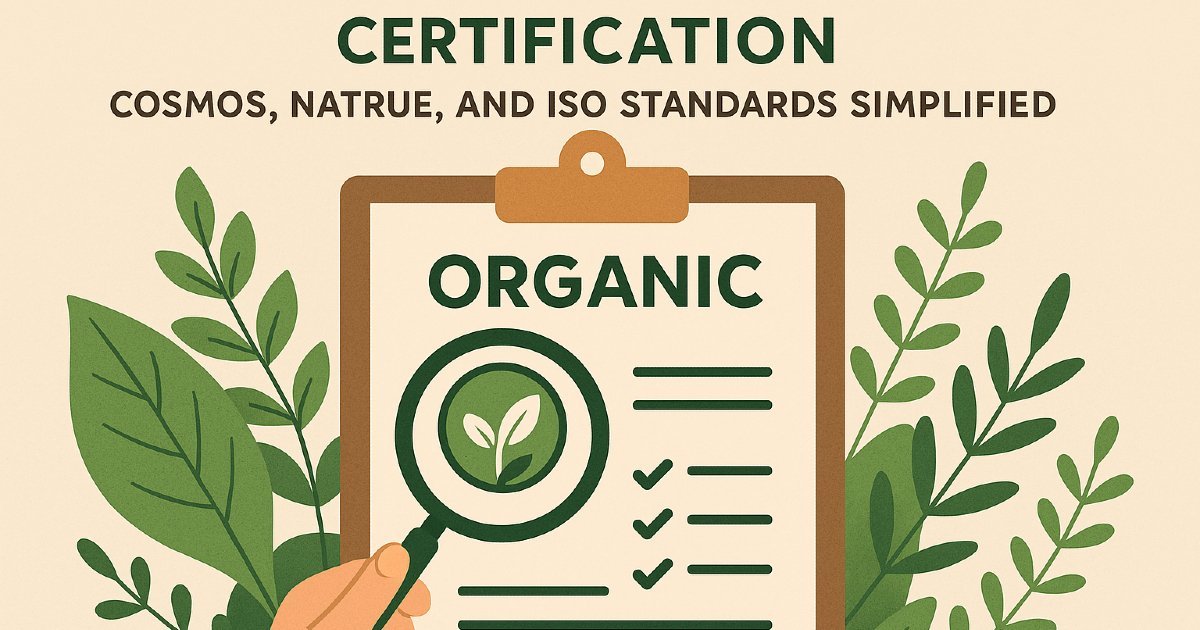
The demand for natural and organic cosmetics is at an all-time high, but with it comes a complex web of standards, certifications, and regulatory hurdles. In a recent live training workshop, I demystified the process of achieving organic certification, focusing on the COSMOS, NaTrue, and ISO 16128 standards. This comprehensive guide distills the workshop’s key insights, offering actionable advice for brands seeking to navigate the certification landscape, avoid common pitfalls, and build consumer trust.
1. Understanding the Standards: COSMOS, NaTrue, & ISO 16128
1.1 – COSMOS: The Gold Standard for Natural & Organic Cosmetics
COSMOS (Cosmetic Organic and Natural Standard) is the most widely recognised international certification for natural and organic cosmetics.
- Developed by leading European certification bodies, it sets rigorous requirements for:
- Organic content: At least 95% of plant-based ingredients must be organic for “COSMOS Organic” certification.
- Sustainability: Emphasises responsible sourcing, green chemistry, and environmental management.
- Full lifecycle oversight: Covers everything from raw material sourcing to packaging and labelling.
- Certification Types:
- COSMOS Organic: Strictest level, with high organic content thresholds.
- COSMOS Natural: For products with high natural content but lower organic percentages.
- Raw Material Certification: “COSMOS Certified” (organic) and “COSMOS Approved” (natural, non-organic).
- Key Principles:
- Promote biodiversity and responsible resource use.
- Mandate clean, safe processing methods.
- Require transparent labelling and marketing.
1.2 – NaTrue: Ingredient Authenticity and Transparency
NaTrue focuses on the authenticity and integrity of natural and organic ingredients.
- Two certification levels:
- Natural Cosmetics (Level 1): Minimum natural content, with limits on derived natural substances.
- Organic Cosmetics (Level 2): Higher thresholds for organic content (≥95% of natural/derived ingredients must be organic).
- Distinctions:
- Emphasises ingredient origin and minimal processing.
- Less focus on packaging/environmental management compared to COSMOS.
- Unified NaTrue label for both certification levels. ISO 16128: The Calculation Guideline
1.3 – ISO 16128: The Guideline
ISO 16128 is not a certification but a guideline for calculating the natural and organic content of cosmetic products. It’s widely used for internal benchmarking and marketing claims but lacks third-party verification or a certification logo.
- Key Points:
- Useful for substantiating “natural” claims.
- Does not replace the credibility of COSMOS or NATURA certification.
2. Key Compliance Challenges and Solutions
2.1 – Documentation and Traceability
Challenge: Missing or incomplete supplier documentation is a leading cause of audit delays and certification denials.
- Solutions:
- Centralise documentation: Use standardised templates and digital databases.
- Traceability: Maintain full records from raw material sourcing to finished product.
2.2 – Marketing and Labelling Pitfalls
Challenge: Misleading claims (“chemical-free,” “100% organic”) and improper logo use can result in regulatory penalties and loss of consumer trust.
- Solutions:
- Substantiate all claims: Ensure marketing is backed by scientific evidence and compliant with regulations.
- Strict logo usage: Follow certifier guidelines for logo size, colour, and placement.
2.3 – Certification Misconceptions
Challenge: Confusing ISO 16128 compliance with third-party certification.
- Solution:
- Clearly communicate the difference to both internal teams and consumers. Only COSMOS and NATURA offer certified organic status with independent audits.
3. The Organic Certification Process: Step-by-Step
3.1 – Select the Right Standard
- Assess product and market needs: COSMOS is more comprehensive; NaTrue is ingredient-focused; ISO 16128 is for internal use.
3.2 – Engage with Certification Bodies Early
- Authorised certifiers: Work with recognised bodies (e.g., ECOCERT, Soil Association).
- Pre-submission review: Avoid incomplete or misaligned documentation.
3.3 – Prepare Documentation
- Ingredient origin certificates
- Safety and technical data sheets
- Manufacturing flowcharts,…
3.4 – Undergo Audit and Inspection
- Document review: Certifier checks all paperwork.
- Onsite inspection: Verifies manufacturing, packaging, and traceability.
3.5 – Labelling and Packaging Compliance
- Recyclable/biodegradable packaging (COSMOS requirement)
- Accurate, compliant labels: Certifiers may require pre-approval of packaging.
3.6 – Certification and Renewal
- Annual renewal audits: Maintain organised records and ongoing compliance.
- Certification costs: Budget for application, audit, and renewal fees (COSMOS is generally more cost-effective than NaTrue).
4. Strategic Considerations for Brands
4.1 – Choosing the Right Standard
- Market alignment: COSMOS is recognised globally; NaTrue is strong in the EU.
- Product positioning: Organic certification builds trust and supports premium pricing.
4.2 – Multi-Standard Compliance
- Harmonise documentation: Centralise records to streamline audits.
- Supplier management: Use checklists and regular training to ensure compliance across standards.
4.3 – Internal Coordination
- Cross-departmental training: Prevent silos and misaligned claims.
- Appoint a compliance coordinator: Oversee regulatory reviews and joint planning.
5. Common Pitfalls and How to Avoid Them
5.1 – Documentation Errors
- Missing certificates: Always request and validate supplier documents.
- Incomplete traceability: Map the full supply chain for every ingredient.
5.2 – Calculation Mistakes
- Including water in organic content: COSMOS excludes water from organic percentage calculations.
- Counting minerals as organic: Minerals (e.g., mica) are allowed but not counted as organic.
5.3 – Ingredient Processing
- Non-approved processes: Only certain physical/chemical processes are allowed (see COSMOS annexes).
- “Naturally derived” ≠ compliant: Some chemical modifications disqualify ingredients.
5.4 – Labelling and Logo Use
- Improper logo placement or size: Follow certifier artwork guidelines exactly.
- Dual market conflicts: Separate labels may be needed for EU and US markets.
6. Navigating Regulatory Changes and Dual Markets
6.1 – EU Green Claims Directive
- No vague claims: “Eco-friendly,” “biodegradable,” or “green” require scientific substantiation.
- Carbon neutrality: Offset-based claims are banned.
- Action: Use certification labels, train staff, and update documentation.
6.2 – Microplastics Ban
- Restrictions: Synthetic polymer microparticles above 0.01% are banned unless exempt.
- Labelling: Disclose microplastic content if present.
- Timeline: Microbeads banned since 2023; phased bans for other products through 2035.
6.3 – US vs. EU Regulations
- USDA Organic: Applies only to agricultural ingredients.
- FDA/ISO: More flexible, but claims must be truthful and substantiated.
- Dual compliance: Adjust formulations and labels for each market’s requirements.
7. Formulation and Labelling Best Practices
7.1 – Formulation for High Organic Content
- Preservative systems: Use robust, COSMOS-approved options to prevent microbial growth.
- Emulsifiers: Choose blends that are both COSMOS-approved and provide stability.
7.2. – Labelling for Compliance and Consumer Trust
- Certification logos: Only display COSMOS or NaTrue logos after official approval. Ensure the logo is the correct size, color, and placement as per certifier instructions.
- Organic percentage disclosure: Clearly state the percentage of organic and natural content, as required by COSMOS and NATURA. For example, “99% natural origin, 25% organic ingredients.”
8. Summary and Key Takeaways
- Choose the right standard: Align your certification choice with your product, market, and brand positioning.
- Documentation is critical: Maintain organised, up-to-date records for every ingredient and process.
- Formulate strategically: Select ingredients and processes that maximise organic content and meet certifier requirements.
- Label with care: Ensure all claims are substantiated, labels are compliant, and logos are used correctly.
- Stay current: Monitor regulatory changes and update your processes and documentation accordingly.
Achieving organic certification is a rigorous but rewarding process that can set your brand apart in a crowded market. By understanding the standards, preparing thoroughly, and maintaining transparent practices, you can build lasting consumer confidence and contribute to a more sustainable cosmetics industry.
*****
Want deeper guidance?
Explore the full process in depth in our Live Training Workshop Recording (28 January 2026): Achieving Organic Certification and learn how to navigate COSMOS, NaTrue, and ISO 16128 with confidence.